
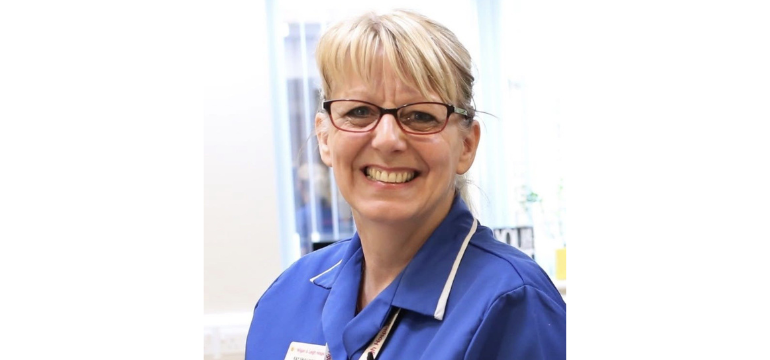
Kay joined Wigan & Leigh Hospice in July 1995, not knowing it would become her professional home for the next 30 years. She had come into nursing at 31, already drawn to palliative care from her student days.
“In my second year of training, our tutor asked where we saw ourselves in five years,” said Kay. “I said straight away: I want to work in a hospice.”
After a short spell in Casualty, fate intervened. A colleague handed her a job advert for the hospice, and Kay applied. She still remembers the interview vividly – arriving in her nurse’s uniform, nervous but honest, and unexpectedly emotional when talking about her early experiences of loss.
“I realised then the matron wasn’t looking at what was on paper. She was looking at who you were as a person, and whether you’d fit her team.”
Kay was offered a temporary contract. She kept turning up, and after a year, her post became permanent. She has been part of the hospice ever since.
From Poolstock to Hindley
Kay began her hospice career at the old Poolstock building, a place she remembers as warm, close‑knit and deeply personal.
“It felt like a family. Everyone supported each other. The building was small, but it had a heart.”
When she first visited the new hospice building in Hindley, it was just a shell – no plaster, no doors, just the outline of what would become a home for thousands of families.
“I remember walking around thinking, ‘This is vast’. It was such a change from Poolstock.”
A changing world of care
Across three decades, Kay has seen hospice care evolve in many ways. Patients’ needs have become more complex, and the tools used to support them have changed too. Technology now plays a much bigger role in how care is recorded and coordinated.
“When I started, everything was on paper,” said Kay. “Now we use laptops and digital systems, which help keep everyone updated and make sure care is consistent.”
She remembers earlier days when staff had more time for complementary therapies, long walks in the garden, and taking patients around the grounds – moments that brought comfort, calm and connection.
“Things are different now, but the heart of the work hasn’t changed. It’s still about being there for people.”
Life on nights
For the past four years, Kay has worked night shifts – a role that requires independence, vigilance and calm.
“You have to trust your own judgement. Things can change so quickly. One minute someone is talking to you, the next minute they’ve deteriorated. You have to be ready, and you have to make sure families are there if they want to be.”
Night shifts also bring moments of connection.
“Some people can’t sleep because everything is going round in their head. Sometimes they just need someone to listen.”
The people she carries with her
Across 30 years, many patients and families have stayed with Kay. One of the earliest was Muriel, who became the first person Kay told when she discovered she was pregnant.
After Muriel died, her husband brought in a sweet box in her memory and would return to refill it.
“It meant a lot,” said Kay. “It showed how much she’d touched us – and how much we’d touched her.”
There were moments of humour too – like the patient who painted his toenails bright pink and joked with the doctor that it was a reaction to medication, and the “duchess”, a lady Kay remembers with great fondness.
Thirty years of care
When asked what kept her at the hospice for so long, Kay’s answer is simple.
“Dedication. I was here before this building was. The hospice is a big piece of me.”
As she prepares for retirement, Kay feels a mixture of excitement and apprehension.
“It’s daunting. I’ve worked since I was 15. The hospice has been a huge part of my life. It will be strange not coming in and seeing everyone.”
A message to her colleagues
Kay’s advice to new staff is rooted in experience.
“Look after yourself. Don’t let things overwhelm you. And talk to someone if you need to.”
And to the colleagues she has worked alongside for three decades:
“It’s been a privilege. I’ve worked with some amazing nurses. Just look after each other – and enjoy what you do.”